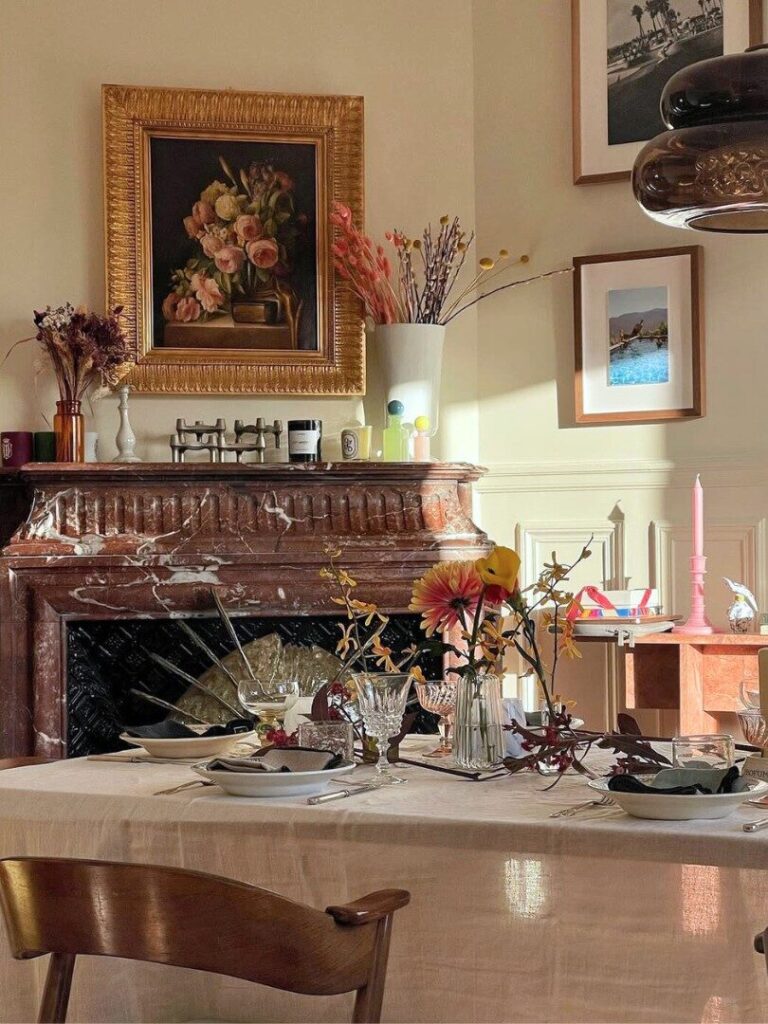
Whether you’re team open concept and just want a few layout ideas, or you find yourself in an open concept home but prefer the more traditional layout, I think we can all agree that styling a living room and dining room combo can be tricky. (It’s why you’re here after all!) When we were building our house, I thought I wanted an open concept because that’s what everyone else did – very expensive lesson learned. Like you, I’ve been struggling with how to divide a living room and dining room combo, and during my years of obsessing (er, thinking) about it and trying out different things, I came across several ideas that could be just the solution you need (short of starting over with a new house that is!). Let’s get into all the best ways I’ve found for how to divide a living room and dining room combo so you can stop obsessing and get back to loving your space.
1. Use Decorative Screens as Room Dividers


This option doesn’t work for all (myself included) as a room divider may block windows and therefore, all the natural light, but for some homes and styles, a room divider might just work!
A decorative screen can be an easy and relatively inexpensive way to create flexible boundaries in your living room and dining room combo. The right decorative screen not only allows you to adapt the space as needed, but it can add a stylish element as well. Though it doesn’t block sound, this could be useful during dinner parties or family gatherings, providing a sense of privacy and intimacy when the occasion calls for it.
The trick is to choose a high-quality and beautiful screen. If you’re not renting, you may not want it to look too temporary and like an afterthought, so whether it’s a beautiful screen with intricate designs or something vintage to fit your European space, choose the divider that best suits your interior style.
2. Hang Up Curtains


Curtains that aren’t on a window? Hear me out! Curtains offer another stylish solution. Not only do they add interest and style to your space, but they can add a mental separation as well. Want to make your dinner party feel intimate? Shut the curtains. Don’t need them closed? Then you can easily open up the space again, giving you the flexibility to adapt your home to different occasions and moods.
To let light through, opt for sheer fabrics to keep the room bright and airy while still defining the spaces. On the other hand, heavier curtains can be drawn for a more substantial divide (and also a sound barrier) when needed.
2. Use Area Rugs to Define Each Space


Though I have currently given up on a dining room rug (kids and clean up did me in), I can’t deny that area rugs are an easy and stylish way to define an area! By placing a rug for both your living and dining area, you are signaling that these are two different spaces. You could even choose a rug for one area and not the other to give a slight distinction of spaces.
When selecting rugs, the key is complementation and differentiation. You want them to complement each other and look like they fit under the same style, yet you want each one to portray the unique vibe of each space, so they signal a transition from one area to another. Sisters, not twins!
Your living room rug might have a large area rug in a thick wool material while you’re dining area rug might be a thin jute indoor/outdoor rug, ideal for handling spills and crumbs. This tactile difference not only separates the zones but also enhances the functionality of each area. Plus, the right rug can tie together the room’s decor, adding layers of comfort and visual interest. It’s a simple trick that makes a big impact.
3. Install Open Shelving


If you have enough space between your living and dining areas, then open shelving can be a game-changer in creating distinct zones. Installing this provides a way to section off areas without sacrificing the open feel that makes the space inviting – and what probably drew you to the home in the first place.
Plus, can you just imagine all the fun styling shelves will be? Filled with your favorite books, seasonal decor pieces, candles, and small plants, these not only serve as a boundary but also add a layer of personality to your home.
The best way to do this is to make it look custom. Likely, you’ll need to build (or have someone build) a floor-to-ceiling shelving unit that looks fitted for your unique space – and style. If you have a more industrial aesthetic, use metal and wood to create this. More of a traditional style? Then your best bet is a shelf with molding painted a complementary color that ties in with your existing decor. Going the extra mile with this project will give you the definition you need, as well as the style you want.
4. Add Greenery as Natural Dividers


If you don’t want to take on a custom woodworking project, try this easier solution instead! Plants and greenery can do wonders for defining spaces while also adding a natural and fresh touch. A row of tall potted plants like fiddle leaf figs, olive trees, or snake plants strategically placed can create a soft boundary between the two areas. This not only adds an organic element but also offers a visual and functional separation that feels natural and refreshing (and maybe a little bit like a spa).
Short on floor space? Hanging plants can also be an excellent choice for creating division without taking up precious real estate. Imagine a series of cascading ivy or ferns hanging between the living room and dining area, providing a subtle but effective partition that still allows light to flow through. The greenery helps to soften the transition between the two zones, making the space feel more harmonious too.
Or, how about a vertical garden or plant wall? This dramatic divider is perfect for the plant lover and green thumb! This installation can act as a living art piece that brings vibrancy and life to your home. Plus, the added benefit of improved air quality and a natural boost to your mood makes plants a win-win for any home environment.
5. Build a Built-in Buffet or Half-Wall Bookcase


If you have the know-how (or the right contact), creating a built-in buffet can completely change the way you view your space. Not only does it provide a clear separation between the two spaces, but it also adds valuable storage and display options. Not only that, but intentionally creating a countertop can be a handy place to set dishes while you serve and entertain in your dining area, or it can be a nice place to set a cup of coffee while you’re in your living room. Dual purpose!
Short on pantry space? It can house everything from fine china and glassware to linens and decorative items, making it as functional as it is stylish. By extending the buffet slightly into the living area, you create a natural barrier that subtly yet effectively divides the two zones. Incorporate elements like open shelving, glass-front cabinets, and even integrated lighting to enhance the look and ambiance.
6. Utilize Different Lighting for Each Area


Though different lighting might not make a huge transformation on its own, utilizing it with the other tips in this post can go a long way in feeling like you have separate spaces.
Think of lighting as the jewelry of your space – it can add drama, highlight key areas, and set the overall tone. In the dining area, a chandelier above the table can serve as a focal point, making meal times feel special and intimate.
In contrast, the living room can benefit from a mix of lighting sources that offer flexibility and comfort. Floor lamps, table lamps, and wall sconces can create a warm, inviting atmosphere perfect for relaxation or socializing. The soft, layered lighting in the living area encourages a cozy, laid-back atmosphere, distinguishing it from the more focused lighting in the dining space.
If you want to go a step further, consider installing dimmers. These allow you to adjust the lighting based on the time of day or the mood you want to create. This feature can help each area look distinct and make it feel right for whatever activity is taking place.
7. Consider Using Different Flooring Materials


Now, this idea is very dependent on your specific space, but it just might work. Generally, an open space is best to have one flooring throughout for a cohesive look; too many floors that you see at once can look busy and cluttered.
However, if it suits the space, it can be a very effective way of creating distinct zones. Picture stepping from the warmth of hardwood in your living area to the cool, polished feel of tile in the dining space. This transition not only signals a change in function but also adds a layer of visual interest.
If you think this option is right for you, you’d want two distinct flooring materials, such as tile and wood. The contrast in textures and finishes will naturally guide the eye and define each space without the need for walls. The key is to choose materials that complement each other, so the flow throughout your open-concept home is harmonious and not jarring.
8. Incorporate Different Color Schemes & Wall Treatments


Pulling off different colors and wall treatments in an open-concept home can be tricky, but for the right space, it can be very effective. Color plays a big role in defining and distinguishing different areas, especially when the color slightly shifts from nook to nook.
You probably already have a color palette for your home, so you would want to choose a different color that creates a distinct space, but still ties into the rest of your home. For example, consider using a warm, inviting golden brown in your dining room to complement the soft green in your living area for an all-around cozy, relaxing atmosphere.
You can also experiment with an accent wall to make each area stand out! Adding an accent wall behind the dining table, whether it’s wallpaper, paneling, or brick, can define that space and create a backdrop for meals.
Additionally, consider incorporating colorful accessories such as throw pillows, artwork, and table linens to reinforce the individual color schemes without overwhelming the space.
9. Consider a Double Sided Fireplace


If space and budget allow, installing a see-through double-sided fireplace can transform the way your home looks – and feels! Picture a cozy hearth that you can enjoy from both sides, creating a warm and inviting atmosphere in both spaces. This feature not only serves as a visual and physical divider but also adds an element of luxury and charm to your home. The fireplace becomes a central focal point, drawing attention and providing comfort throughout your home.
Whether you’re curling up with a good book in the living room or hosting a festive party in the dining room, it can all be illuminated by the same flickering flames!
10. Create Separation With Beams


Though it may not be as dramatic as a fireplace, using ceiling beams to create separation in a living room and dining room combo can add both architectural interest and a subtle sense of defined spaces.
Whether these beams run the line or your ceiling or even come down to the floor as a column, strategically using beams can subtly mark the boundaries between each area. The beams can be stained to match your furniture or painted to blend with your ceiling for a seamless look. This method not only visually breaks up the space but also adds a cozy, rustic charm that feels both intentional and stylish.
11. Build a Low Bookshelf


Though going up is a great way to feel like you have different spaces, going low can create different zones without sacrificing any natural light or sight lines.
Think of a low bookshelf as a versatile piece that not only serves as a visual barrier but also offers additional storage and display options. A waist-high bookshelf can house your favorite reads, travel memories, and potted plants to bring personality into your space. Place it strategically between your living and dining areas to create a distinct yet open separation.
You can also use the top of the bookshelf as a surface for additional decor or functional items like a lamp or a fruit bowl. This not only maximizes your space but also adds layers of interest and utility to your home. Plus, a low bookshelf allows for light and air to flow freely, maintaining that open, airy feel while effectively defining each area.
12. Build a Window Divider


One elegant way to divide a living room and dining room is by incorporating a window divider. This type of partition not only separates the areas but also allows light to flow through, still giving you that open and airy feel. Window dividers can range from classic French doors to glass panels framed in wood, sheetrock, or metal – giving you many options.
What makes these so great is that they create a visual boundary without blocking all the sightlines, making your space feel larger and more connected. Privacy and style!
13. Create Arched or Encased Openings


If your open concept layout has enough square footage, then building an enlarged opening can be one of the best ways to define a living-dining space. It’s a great way to divide the living room from the dining room while still providing an open feel, as well as a walkway.
Arched openings bring a sense of old-world style and architectural interest to your space. They create a gentle transition between the two areas without closing them off completely. Encased openings, on the other hand, offer a more structured approach by framing the passage between rooms, giving each area its own defined identity as well as a modern touch.
By integrating arched or encased openings, you’ll not only define your living and dining areas but also add a unique, decorative element that elevates the overall look of your home!
14. Arrange Your Furniture to Create Zones

Last but not least, if large rooms aren’t part of your open-plan living and all the ideas above don’t work to create separation between your living and dining room, then the next best thing is to use your furniture to create zones. Though it may be a smaller project than say, installing a fireplace, it can make a big difference in defining separate zones. We have a small living room dining room combo and for our own space personally, furniture placement has been the easiest way to establish a layout for this open floor plan. (Though I have tried all the things!)
In your living room, start by positioning your couch and chairs to form a cozy, inward-facing arrangement that naturally defines the living area. Centered around a coffee table, this setup not only creates a sense of intimacy and allows for easy conversation, but also establishes a clear boundary without needing physical walls.
While you’re setting up, don’t forget to scooch your furniture in a little closer together, while minding walkways, of course. Not only does furniture closer together give you more space for the dining area, but it looks cozy and intimate, making the living room area look even more like its own living space. A professional interior designer suggests about 16 inches between your sofa and coffee table, however, I’ve done a little closer and it still works.
When it comes to separating your open-plan space, ideally, you would choose furniture with a high back that has its back to your dining area, whether that’s chairs or a couch. You can even put a console table behind your couch to make that arrangement feel complete!
For the dining area, consider adding more to the space if you have the room. A dining room table is a given, of course, but if you have the space, adding a corner chair, a set of picture frames, or a cute small table can help the dining room area feel decorated in its own right, and not like you just have a random floating table.
For small spaces and small rooms, consider using a round table as that visually frees up the space and makes walking around it easier.
Dividing Your Living Room and Dining Room Combo
A combined living and dining room is tricky to style, but it’s not impossible! Whether it’s design elements, your room layout, or your built-in furniture, you can create distinct yet cohesive spaces that cater to both relaxation and dining needs. Use these tips to help you bring structure and style to your open-concept area, making it feel defined while still spacious.
Want more tips on how to separate your open floor plan? Open Concept to Semi-Open Concept Home: 17 Ways To Add Separation to an Open Floor Plan